Nine Decades of Movies, Books, and Seminars Swore You Only Use 10% of Your Brain — Neuroscience Disagreed the Whole Time
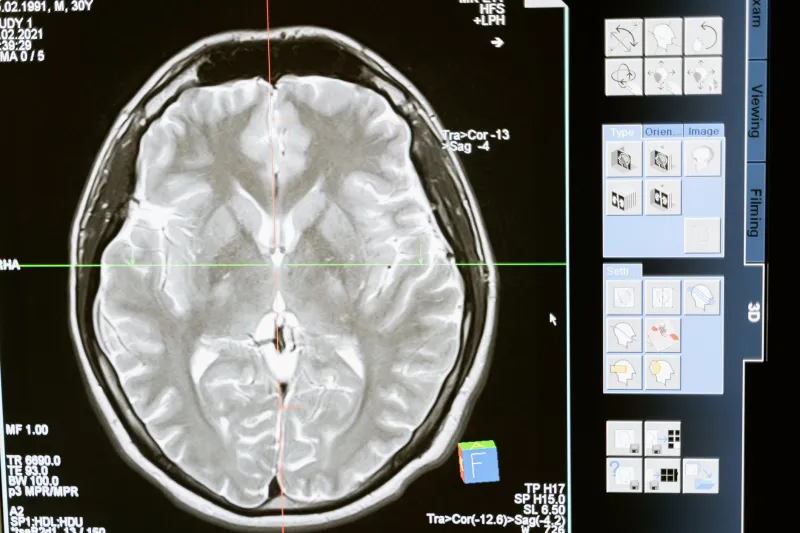
It's one of the most confident 'facts' in American pop culture: we only use 10% of our brains. The idea has propped up countless productivity pitches, appeared in self-help bestsellers, and served as the entire premise of the 2014 Scarlett Johansson film Lucy — in which a woman unlocks her full cerebral capacity and transcends physics.
Neuroscientists have spent decades trying to kill this one. It keeps coming back anyway.
Where the Number Came From
No one can point to a single birth certificate for the myth, which is itself telling — real findings get cited; folklore gets shrugged at. The most likely suspects are a handful of early-1900s figures. Neurologists of that era knew some brain regions' functions were mysterious, and 'silent cortex' language may have been misread as 'unused cortex.' Harvard psychologists William James and Boris Sidis wrote about people accessing only a 'small part' of their mental potential — a motivational sentiment, not a measurement, that later writers hardened into a statistic.
The number also got a boost from the self-improvement industry. A 1929 ad for a correspondence course reportedly promised to teach readers to use their 'untapped' brain power, and Dale Carnegie-era positive thinking culture was fertile ground for the idea that a hidden 90% was waiting to be switched on. By mid-century, the figure was repeated so often it no longer needed a source.
What Brain Imaging Actually Shows
Here's the problem with the 10% claim: the brain is expensive. It's roughly 2% of your body weight but consumes around 20% of your energy. Evolution does not generally permit organs to carry nine pounds of idle tissue through a calorie-scarce history.
More directly, imaging tells the story. Techniques like fMRI and PET scans show that even during sleep, the brain is active nearly everywhere. No region sits dormant waiting for its moment. Certain tasks light up certain areas — that's what task-based imaging measures — but over a full day, virtually all of the brain gets used. Damage to almost any part of it produces real consequences; there's no 'spare' 90% you could lose without noticing.
Why It Won't Die
The myth persists because it's not really a neuroscience claim — it's a hope claim. 'You're only using 10% of your brain' is a flattering way of saying 'you have untapped potential,' which is the engine of an entire self-help economy. It flatters, it motivates, and it comes with a tidy number that sounds scientific. Hollywood recycled it again in Limitless (2011) and Lucy, and each blockbuster hands the myth a new generation.
There's also a genuine idea it gets backwards. Neuroplasticity — the brain's ability to form new connections and learn throughout life — is real and exciting. But it's about rewiring the brain you use, not unlocking the brain you don't.
The Takeaway
You use all of your brain, nearly all the time, including right now. The good news hiding inside the myth's collapse: the brain you have is already remarkably adaptable — no secret switch required.