That 'Gut Feeling' You Trust So Much Is Actually Your Brain Doing Math You Can't See
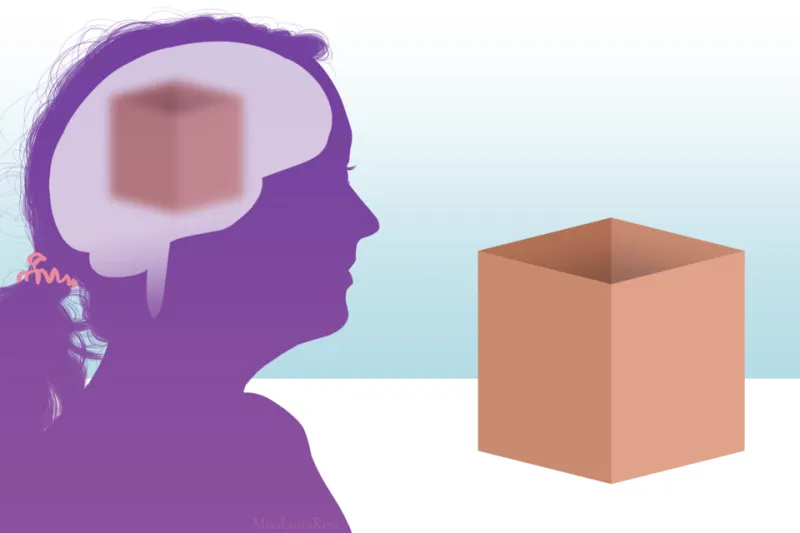
Photo: MissLunaRose12, CC BY-SA 4.0, via Wikimedia Commons
There's a moment most people recognize. You walk into a job interview and something feels off before anyone says a word. You meet someone at a party and instantly like them — no particular reason, you just do. You're driving and, without consciously noticing anything, you tap the brakes a second before the car ahead of you stops short.
We call this intuition. Or a gut feeling. Or sometimes, in more dramatic moments, a sixth sense. And the way people talk about it, you'd think it operates completely outside the brain — some mystical signal that bypasses rational thought entirely.
The truth is both simpler and considerably more impressive.
What's Actually Happening When You 'Just Know'
Your brain is an extraordinarily efficient pattern-recognition machine. From the moment you're born, it's cataloging experiences — not just the ones you consciously remember, but thousands of micro-observations that never make it to the surface of your awareness. The slight hesitation in someone's voice. The way a neighborhood looks at dusk. The smell of a kitchen that reminds you of something you can't quite name.
All of that gets filed away. And when you encounter something that matches a stored pattern, your brain flags it — fast. Faster than conscious thought. Faster than language.
That's intuition. It's not magic. It's your nervous system delivering a conclusion before it's had time to write up the report.
Neuroscientists sometimes call this process implicit learning — the brain absorbing regularities in the environment without the person being aware they're learning anything at all. Research by psychologists like Gary Klein, who spent decades studying how firefighters, military commanders, and emergency room nurses make split-second decisions, found that experienced professionals weren't using formal logic in crisis moments. They were pattern-matching against an enormous internal library of situations they'd seen before, often without being able to explain exactly why they made the call they did.
The gut, in other words, is just a metaphor. The decision is happening in your prefrontal cortex and your limbic system, drawing on everything you've ever experienced — whether you remember it or not.
Why We Insist on Calling It Something Mystical
Part of the reason the sixth-sense framing sticks is that intuitive knowledge feels different from reasoned knowledge. When you work through a problem step by step, you can trace the logic. When intuition fires, you just arrive at a conclusion. That gap — between knowing and knowing how you know — feels like evidence of something beyond explanation.
It also doesn't help that intuition is genuinely hard to study. You can't easily scan someone's brain in the moment they sense that a first date isn't going anywhere. The experiences that feed intuition are accumulated over years and vary wildly from person to person. That messiness makes it easy for the mystical explanation to fill the space that science hasn't fully mapped yet.
Culture plays a role too. Intuition has been romanticized in self-help books, business leadership circles, and wellness culture for decades. Steve Jobs famously championed intuition as superior to rational analysis. Countless productivity guides tell you to trust your gut. When the people giving advice treat intuition as a mysterious gift rather than a learnable, explainable process, the myth compounds.
The Part That Actually Should Impress You
Here's the thing: understanding that intuition is pattern recognition doesn't make it less remarkable. If anything, it makes it more so.
Think about what your brain is doing when a seasoned ER nurse looks at a patient and knows something is wrong before the monitors show anything unusual. She's drawing on hundreds of similar cases, each one leaving a faint trace in her neural architecture. Her intuition isn't guesswork — it's a compressed summary of enormous expertise, delivered instantly.
That's not a sixth sense. That's something better.
And it's also why intuition is domain-specific. A chess grandmaster has incredible intuition on the board and might have completely unremarkable gut feelings about, say, real estate. Their pattern library is deep in one area and thin in another. The brain can only match patterns it's actually seen.
This is also why intuition can be wrong — sometimes badly. If the patterns your brain has absorbed are biased, incomplete, or based on limited experience, your gut feelings will reflect those flaws. Implicit biases operate through exactly this mechanism. The brain flags something as familiar or unfamiliar, safe or threatening, based on patterns it's absorbed from an imperfect world. Trusting your gut uncritically can mean trusting your blind spots just as much as your expertise.
What to Do With This Information
Understanding the real mechanism behind intuition gives you something useful: a framework for knowing when to trust it and when to question it.
In areas where you have genuine, accumulated experience — your profession, a long-term relationship, a skill you've practiced for years — your gut is often drawing on real signal. It's worth listening to, even if you can't immediately articulate why.
In unfamiliar territory, or in situations where you know your past experiences might have introduced bias, it's worth slowing down and asking what, exactly, your gut is actually responding to. Sometimes that question surfaces something real. Sometimes it reveals that you're reacting to a pattern that doesn't actually apply.
The next time you have a strong feeling you can't explain, you don't have to choose between dismissing it entirely and treating it like a cosmic message. There's a third option: recognize it as information, figure out where it might be coming from, and decide accordingly.
That's not less intuitive. That's just intuition used well.