The Wolf Scientist Who Spent 40 Years Trying to Undo the Damage His Own Research Caused

Photo by Alexandra on Unsplash
Ask almost any man in America what an 'alpha' is, and he'll have an answer ready. Dominant. Assertive. The one who leads the pack. The one others follow. The term has become so embedded in the way Americans talk about masculinity, leadership, and social dynamics that it shows up in self-help books, podcast titles, gym culture, dating advice, and corporate training seminars.
There's just one problem. The scientist whose work launched the entire framework spent the better part of his career trying to tell everyone they got it completely wrong.
Where the 'Alpha Wolf' Idea Actually Came From
In 1970, wildlife biologist L. David Mech published a book called The Wolf: The Ecology and Behavior of an Endangered Species. Based on observations of captive wolf populations, the book described wolves as living in rigid dominance hierarchies — with an 'alpha' male at the top who earned his position through aggression and competition.
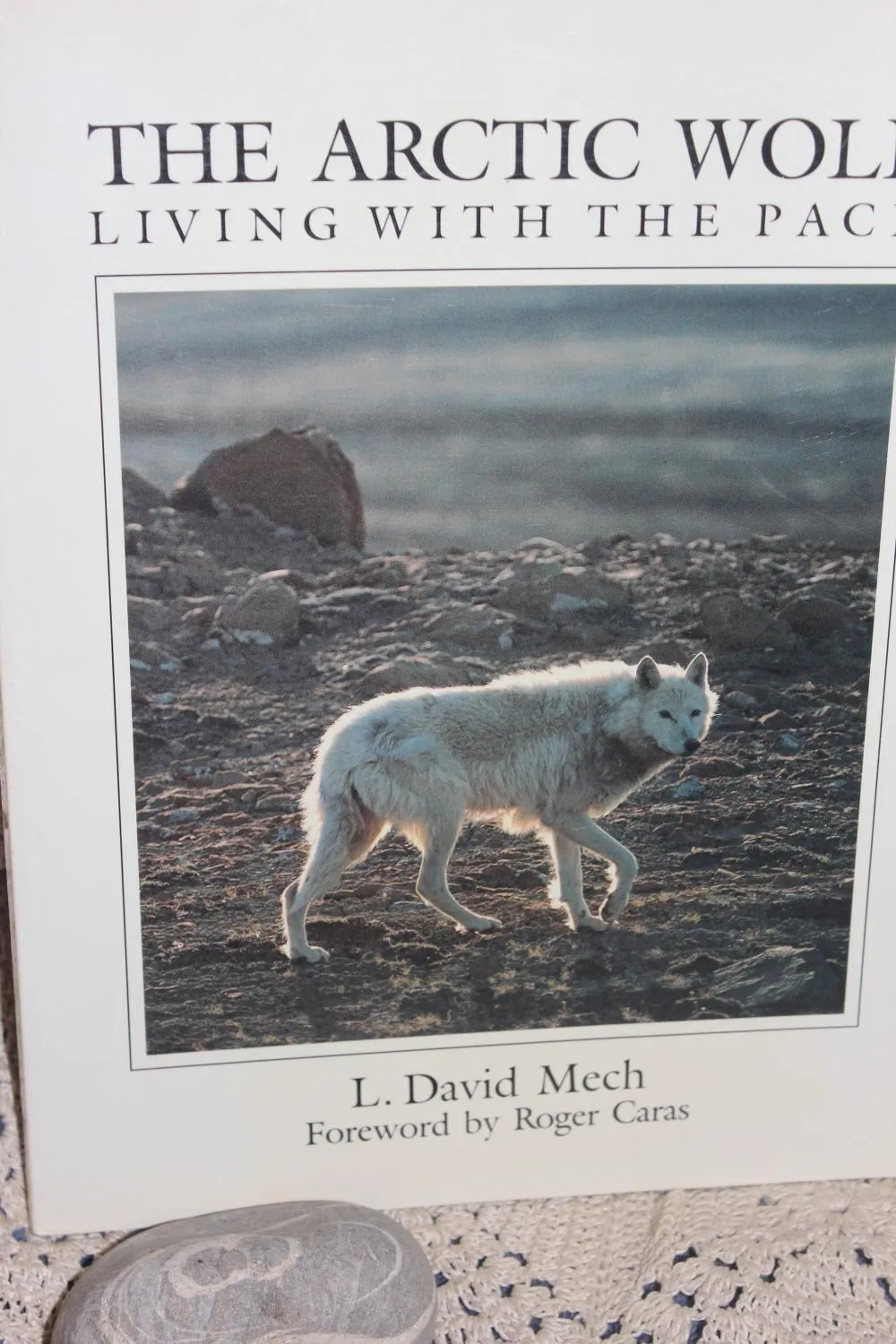 Photo: L. David Mech, via pictures.abebooks.com
The book became enormously influential. It was readable, vivid, and offered a clean framework for understanding animal social behavior. By the 1980s and 1990s, the alpha concept had migrated well beyond wildlife biology and into popular psychology, self-help, and eventually mainstream conversations about what it means to be a man.
The problem is that captive wolves, it turns out, behave almost nothing like wild wolves.
What Mech Found When He Actually Watched Wild Wolves
After publishing that 1970 book, Mech spent decades in the field — specifically in Ellesmere Island in the Canadian Arctic — observing wild wolf packs in their natural habitat. What he found didn't match what he'd written at all.
 Photo: Ellesmere Island, via c8.alamy.com
Wild wolf packs aren't structured around dominance contests. They're almost always family units — a breeding pair and their offspring from various years. The so-called 'alpha' male isn't a conqueror who fought his way to the top. He's typically just the father. The pack follows him not because he's the most aggressive, but because he's a parent who knows the territory, leads hunts, and has experience.
Mech became so concerned about how his early work was being misread that he spent years trying to get his original book pulled from publication. He wrote papers explicitly asking the scientific community to stop using the term 'alpha wolf.' He published a widely circulated 1999 paper in the journal Canadian Field-Naturalist titled, plainly, 'Alpha Status, Dominance, and Division of Labor in Wolf Packs,' in which he argued the word 'alpha' was doing more harm than good.
'The concept of the alpha wolf is well ingrained in the popular wolf literature,' he wrote, 'and even in some scientific literature. However, it is outdated and misleading.'
His publisher kept selling the 1970 book anyway. It's still in print.
How a Wildlife Misunderstanding Built a Masculinity Philosophy
By the time Mech was trying to walk his conclusions back, the cultural machinery had already done its work. The alpha concept had been absorbed into American ideas about male behavior with remarkable speed and thoroughness.
Self-help books told men to project alpha energy. Dating coaches built entire systems around alpha versus beta dynamics. Corporate leadership training borrowed the language wholesale. Men's fitness magazines ran articles on 'alpha body language.' The framework was everywhere — and it all traced, however loosely, back to those captive wolf observations.
The appeal isn't hard to understand. The alpha model offered a clear, biological-sounding justification for a particular style of dominance-based masculinity. If wolves did it, the argument went, then maybe it was just nature. Maybe hierarchy and aggression weren't cultural choices — maybe they were hardwired into social animals.
Except the wolves weren't actually doing it. Not in the wild. The whole thing was an artifact of putting stressed, unrelated animals in an enclosure together and watching what happened when they had no choice but to establish some kind of order.
Why the Myth Refused to Die
Mech's corrections never traveled as far as his original findings did, and that pattern is familiar to anyone who studies how misinformation spreads. The original idea was simple, sticky, and satisfying. The correction was nuanced, required context, and didn't fit neatly on a bumper sticker.
There's also the uncomfortable reality that a lot of people had built identities, brands, and businesses around the alpha framework by the time the corrections started circulating. Retractions don't sell books. Dominance hierarchies do.
Scientists who study animal behavior have largely moved on. Most contemporary researchers avoid the alpha terminology entirely when describing wild canine social structures. But in gyms, podcasts, and comment sections across America, the 1970 captive wolf study lives on as settled science.
The Actual Takeaway
Mech's story is a genuinely strange one — a researcher watching his own early work spiral into cultural mythology while spending decades trying, largely unsuccessfully, to correct the record. It's also a useful reminder that the scientific-sounding explanations for human behavior are worth examining carefully before accepting them as fact.
Wild wolves, as it turns out, mostly just raise their kids and hunt together. Whether or not that's a useful model for human leadership is a separate question entirely. But at minimum, it's probably worth knowing that the wolves themselves were never quite doing what the alpha theory said they were.
The pack doesn't follow the strongest wolf. It follows the one who knows where to go.