The Medical Establishment Destroyed a Doctor Who Discovered Why New Mothers Were Dying — He Was Right All Along
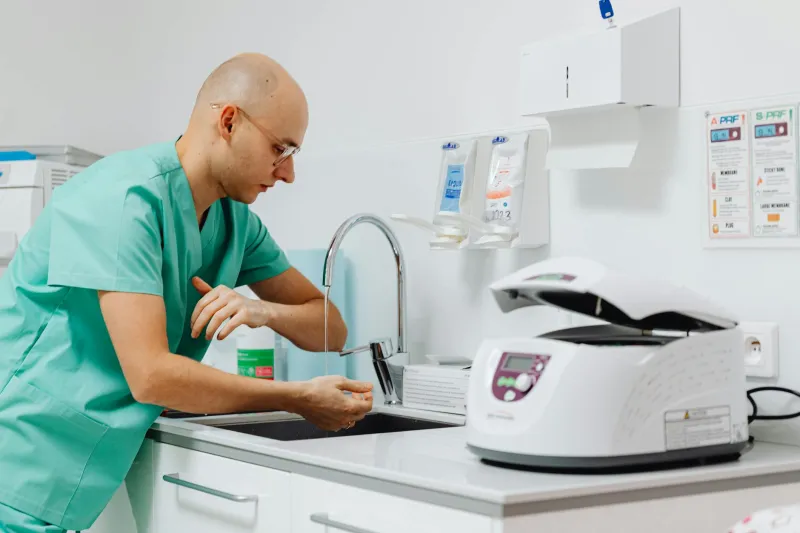
If you've ever wondered why every doctor, nurse, and medical professional obsessively washes their hands before touching patients, you might assume it's always been that way. After all, keeping your hands clean before medical procedures seems like the most obvious thing in the world.
But medical hand hygiene is actually a shockingly recent development — and the doctor who first proved its importance was literally driven insane by his colleagues' refusal to listen.
When Doctors Were Dirtier Than Butchers
In the 1840s, European hospitals were death traps, especially for women giving birth. At the Vienna General Hospital, where Hungarian physician Ignaz Semmelweis worked, the maternal mortality rate in the doctors' maternity ward hovered around 18%. Women were so terrified of this particular ward that they'd beg to be assigned to the midwives' section instead, where death rates were dramatically lower.
The medical establishment had plenty of theories about why so many new mothers were dying from "childbed fever" (what we now know as puerperal sepsis). Bad air. Overcrowding. The phases of the moon. Divine punishment. What they didn't consider was that they themselves might be the problem.
Semmelweis noticed something his colleagues missed: doctors and medical students routinely performed autopsies in the morning, then walked directly to the maternity ward to deliver babies — without washing their hands. The midwives, meanwhile, didn't handle corpses.
The Experiment That Changed Everything
In 1847, Semmelweis instituted a radical policy: everyone entering his maternity ward had to wash their hands and instruments with chlorinated lime solution. The results were immediate and dramatic. Maternal mortality rates plummeted from 18% to less than 2%.
You'd think the medical community would have celebrated this breakthrough. Instead, they turned on Semmelweis with a fury that seems almost incomprehensible today.
Why Brilliant Ideas Get Rejected
The problem wasn't just that Semmelweis was challenging medical practice — he was challenging medical ego. His theory implied that educated gentlemen doctors had been unknowingly killing their patients for decades. In an era when physicians prided themselves on their clean appearance and social status, suggesting their hands were "dirty" was seen as a personal insult.
Semmelweis also couldn't explain why hand-washing worked. Germ theory wouldn't be widely accepted until the 1880s, decades later. Without a scientific framework to explain his results, his colleagues dismissed his findings as coincidence.
The Hungarian doctor didn't help his own cause. Frustrated by the medical establishment's resistance, he became increasingly aggressive in promoting his ideas, publicly calling colleagues "murderers" and "ignoramuses." His confrontational approach made enemies out of potential allies.
The Price of Being Right Too Early
By the 1860s, Semmelweis's career was in ruins. He'd been forced out of his position in Vienna and struggled to find work elsewhere. His mental health deteriorated as he watched preventable deaths continue while his life-saving discovery was ignored.
In 1865, colleagues lured him to what he thought was a medical facility but was actually an asylum. Some accounts suggest he was beaten by guards. Ironically, he died from an infection in his hand — the very type of infection his hand-washing protocol was designed to prevent.
When the Medical World Finally Caught Up
It wasn't until the 1880s, when Louis Pasteur and Joseph Lister popularized germ theory, that the medical establishment finally understood why Semmelweis had been right. By then, it was too late for vindication to matter to the man himself.
Today, Semmelweis is remembered as a pioneer of antiseptic procedures, and "the Semmelweis effect" describes the tendency to reject new evidence because it contradicts established beliefs.
Why This Still Matters Today
The Semmelweis story isn't just a historical curiosity — it's a reminder that "settled science" can be more fragile than it appears. Even basic medical practices we take for granted, like hand hygiene, had to overcome institutional resistance and professional pride.
It also shows how dangerous it can be to challenge expert consensus, even when you're absolutely right. Sometimes being correct isn't enough; timing, presentation, and politics matter just as much as evidence.
The Takeaway
The next time you see a healthcare worker wash their hands, remember that this simple, life-saving practice cost one man his career, his sanity, and ultimately his life to establish. Medical "common sense" that seems obvious today was once revolutionary enough to destroy the person who discovered it.
Semmelweis proved that sometimes the most important breakthroughs come from questioning what everyone else takes for granted — even when that questioning comes at a terrible personal cost.