Your Brain Isn't Actually Split Between Logic and Creativity — That Personality Test Is Based on Fake Science
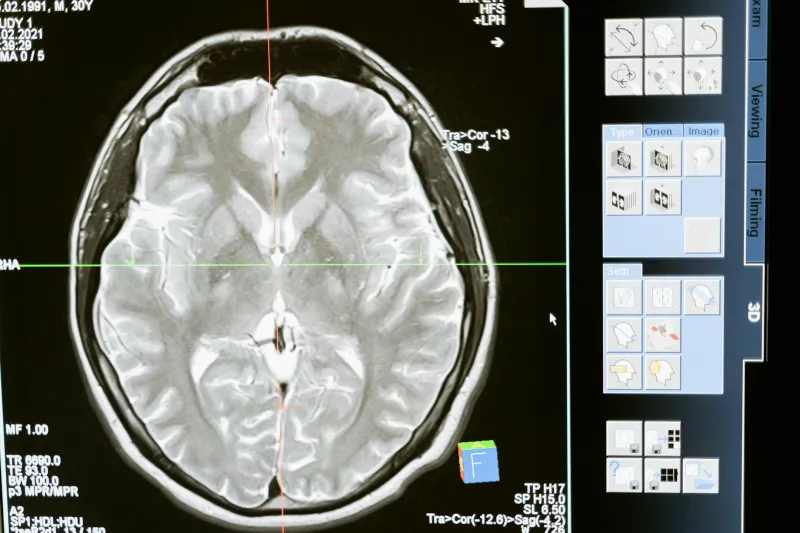
Take a quick personality quiz online and there's a good chance you'll be sorted into one of two camps: logical, analytical "left-brain" thinker or creative, intuitive "right-brain" feeler. This binary has become so embedded in American culture that we use it to explain everything from career choices to relationship compatibility.
There's just one problem: it's essentially fiction.
How a Medical Discovery Became a Personality Framework
The left-brain/right-brain concept does have roots in legitimate science, but those roots have been twisted beyond recognition. In the 1960s, neurobiologist Roger Sperry conducted groundbreaking research on patients who had undergone corpus callosotomy — a surgical procedure that severs the connection between the brain's two hemispheres to treat severe epilepsy.
 Photo: Roger Sperry, via 0701.static.prezi.com
Sperry's work revealed that the two sides of the brain do have some specialized functions. In most people, language processing happens primarily in the left hemisphere, while certain spatial and visual tasks engage the right hemisphere more heavily. This research was revolutionary and eventually earned Sperry a Nobel Prize.
But here's the crucial detail that got lost in translation: these findings applied to people whose brains had been surgically divided. In healthy brains, the two hemispheres work together constantly through millions of neural connections.
The Great Oversimplification
Somewhere between Sperry's careful scientific observations and popular culture, nuanced brain research became a simple personality sorting system. The transformation wasn't accidental — it filled a cultural hunger for easy explanations of human differences.
Self-help authors, corporate trainers, and educational consultants seized on the concept because it offered an appealing framework. Complex personality traits could be reduced to brain geography. Struggling with math? You're probably right-brained. Not artistic enough? Must be too left-brained.
The simplicity was the selling point, but it was also the fundamental flaw. Real personality traits don't map onto brain hemispheres in any meaningful way.
What Brain Imaging Actually Shows
Modern neuroscience has tools Sperry could never have imagined. fMRI scanners can watch healthy brains in action, revealing how different regions activate during various tasks. The results consistently contradict the left-brain/right-brain personality model.
When people solve math problems — supposedly a "left-brain" activity — both hemispheres light up with activity. Creative tasks like improvising music or writing poetry engage networks spanning the entire brain. Even basic functions like recognizing faces or understanding language require coordination between hemispheres.
A 2013 study from the University of Utah analyzed brain scans from over 1,000 people, specifically looking for evidence of "left-brained" or "right-brained" thinking patterns. They found none. While individuals showed preferences for certain neural networks, these patterns didn't align with hemisphere-based personality categories.
 Photo: University of Utah, via www.university-grounds.com
Why the Myth Became Irresistible
The left-brain/right-brain framework succeeded because it solved several cultural problems at once. It provided a scientific-sounding explanation for why people are different, offered a simple way to categorize personality types, and gave individuals a ready-made identity label.
In American culture, which often values specialization and clear categories, the idea that you could be "naturally" logical or creative felt both explanatory and validating. It suggested that personality traits were hardwired rather than developed, removing pressure to grow beyond your supposed neural limitations.
The framework also aligned with existing stereotypes about gender, profession, and intelligence. It gave people permission to say "I'm just not a math person" or "I don't have a creative bone in my body" while pointing to brain science as justification.
The Real Story of How Brains Work
Actual neuroscience paints a far more interesting picture than the left-brain/right-brain binary suggests. Rather than being split between logic and creativity, healthy brains are incredibly integrated systems where different regions specialize in specific functions but work together constantly.
Creativity, for example, involves memory networks (to draw on past experiences), executive control regions (to evaluate and refine ideas), and attention systems (to focus on relevant information). These networks span both hemispheres and coordinate in ways that can't be reduced to "right-brain thinking."
Similarly, logical reasoning engages emotional processing centers, visual-spatial areas, and language regions. The most analytical tasks still require the kind of broad neural cooperation that makes hemisphere-based personality categories meaningless.
Breaking Free From Brain-Based Boxes
Understanding that the left-brain/right-brain personality framework is scientifically baseless doesn't just correct a misconception — it opens up possibilities. Instead of accepting that you're "naturally" weak in certain areas, you can recognize that skills like creativity, analysis, and problem-solving are developed through practice, not predetermined by brain anatomy.
This shift matters for how Americans approach education, career development, and personal growth. Rather than sorting students into "math kids" and "art kids" based on supposed brain types, we can recognize that all students benefit from developing both analytical and creative skills.
The Takeaway
The next time someone describes themselves as a "right-brain person" or dismisses their analytical abilities because they're "too creative," remember that they're referencing a personality framework that neuroscientists have thoroughly debunked. Your brain isn't split between logic and creativity — it's an integrated system capable of far more than any simple binary suggests.
The real science of how brains work is actually more encouraging than the myth. Instead of being locked into predetermined thinking styles, you have the neural flexibility to develop skills across the full spectrum of human capabilities. That's a much better story than being trapped in half a brain.