Scientists Keep Proving Goldfish Have Excellent Memories — So Why Does Everyone Still Call Them Forgetful?
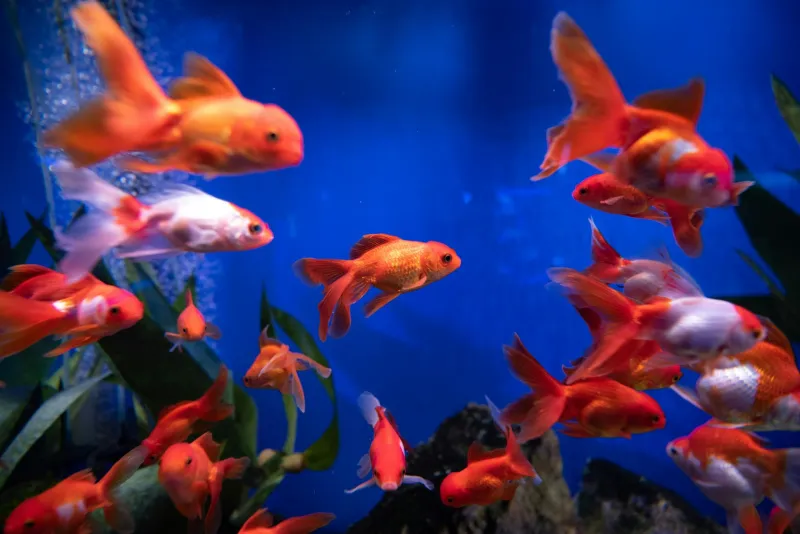
"You have the memory of a goldfish."
It's the perfect insult—gentle enough for family dinner, specific enough to sting. Americans have embraced the goldfish memory comparison so thoroughly that we barely question what it actually means. We just know: goldfish forget everything in three seconds, making them the perfect metaphor for anyone who can't remember where they put their keys.
Except goldfish researchers have been quietly dismantling this assumption for decades.
The Laboratory Evidence Keeps Piling Up
At universities across the country, goldfish have been acing memory tests that would challenge some humans. Plymouth University researchers trained goldfish to navigate complex mazes, with the fish successfully remembering routes for months afterward. Other studies have documented goldfish recognizing their owners' faces, learning feeding schedules, and even distinguishing between different pieces of classical music.
 Photo: Plymouth University, via www.e-architect.co.uk
Dr. Culum Brown, a fish cognition researcher, has spent years cataloging goldfish intelligence: "These animals can remember feeding times, recognize individual humans, and learn complex behavioral patterns. The three-second memory thing is completely fabricated."
Yet somehow, laboratory evidence can't compete with cultural momentum.
Anatomy of a Fake Fact
The goldfish memory myth appears to have no single origin point—it simply materialized in American culture sometime in the mid-20th century and spread like wildfire. Unlike many misconceptions that can be traced to misunderstood research or corporate marketing, this one seems to have emerged from pure assumption.
The logic felt intuitive: small brain equals poor memory. Goldfish live in bowls, swim in circles, and look perpetually surprised. They became the perfect blank slate for projecting our assumptions about intelligence and memory.
The Metaphor That Ate Science
What makes the goldfish memory myth particularly sticky is how useful it became as cultural shorthand. Teachers use it in classrooms, comedians deploy it in routines, and frustrated spouses invoke it during arguments. The "fact" serves social functions that have nothing to do with actual goldfish.
This utility helps explain why contradicting evidence bounces right off. When someone says "goldfish memory," they're not making a scientific claim about fish cognition—they're using established cultural code for "terrible at remembering things."
The Goldfish Industry's Uncomfortable Position
Pet store owners find themselves in an awkward spot when customers reference goldfish stupidity while purchasing supplies. Many have quietly stopped perpetuating the memory myth, instead emphasizing proper care for what they know are relatively intelligent pets.
Goldfish can live for decades with appropriate care, learning their owners' routines and developing distinct personalities. But convincing customers that their "dumb" pet fish actually needs environmental enrichment and social interaction? That's a harder sell when popular culture insists otherwise.
What Goldfish Actually Remember
Research has documented goldfish remembering:
- Feeding schedules accurate to within minutes
- Individual human faces and voices
- Learned behaviors for months at a time
- Complex spatial relationships in their environment
- Social hierarchies with other fish
Some studies suggest goldfish memory spans can extend beyond three months—roughly 30 million times longer than the mythical three seconds.
The Broader Pattern of Animal Intelligence Myths
The goldfish memory myth fits a larger pattern of underestimating animal cognition. Americans confidently repeat "facts" about animal stupidity—lemmings committing mass suicide, ostriches burying their heads in sand—that researchers have thoroughly debunked.
These myths persist because they serve human psychological needs, creating comfortable hierarchies that place us firmly at the intelligence apex. Acknowledging goldfish memory capabilities doesn't threaten human uniqueness, but it does complicate our neat categories.
The Social Media Effect
Social media has given the goldfish memory myth new life, with users ironically joking about their own attention spans in an age of endless scrolling. "I have the attention span of a goldfish" has become millennial and Gen Z shorthand for digital overwhelm.
The irony is thick: we're using an outdated animal intelligence myth to describe very real concerns about technology's impact on human focus and memory.
Why Scientists Can't Kill This Myth
Despite mounting research evidence, the goldfish memory myth demonstrates how cultural "facts" become immune to scientific correction. The myth serves too many social functions—as metaphor, insult, and explanation for human forgetfulness—to be easily displaced by laboratory findings.
Researchers have learned that publishing papers about goldfish cognition doesn't automatically update cultural assumptions. The myth exists in a different realm than scientific facts, serving different purposes and following different rules.
The Real Story
Goldfish aren't the mindless, memory-less creatures we've imagined. They're relatively intelligent pets capable of learning, remembering, and recognizing their environment in sophisticated ways. The three-second memory "fact" tells us nothing about goldfish and everything about how easily we accept and repeat information that fits our preconceptions.
Next time someone mentions goldfish memory, you'll know you're hearing one of America's most persistent animal myths—and that the real goldfish swimming in tanks across the country are probably smarter than we give them credit for.