Fast Fashion Gets All the Blame for Fashion's Pollution Problem — The Full Picture Is a Lot More Inconvenient
Fast Fashion Gets All the Blame for Fashion's Pollution Problem — The Full Picture Is a Lot More Inconvenient
By now, the narrative is familiar. Fast fashion brands — think Shein, H&M, Zara, and a rotating cast of ultra-cheap online retailers — are the fashion industry's environmental villains. They produce too much, too quickly, at too low a quality, and the planet pays for it. Documentary films, magazine investigations, and social media campaigns have made this story feel settled.
And in important ways, it is accurate. But researchers who study textile supply chains and environmental scientists who measure clothing's actual footprint will tell you the story is considerably more complicated — and that the fast fashion villain narrative, while useful, has also become a way of letting a lot of other significant contributors off the hook.
How the Fast Fashion Villain Story Got Built
The term 'fast fashion' itself is relatively recent. It gained widespread use in the early 2000s, partly as a journalistic shorthand for the accelerated production cycles pioneered by retailers like Zara, which famously compressed the design-to-shelf timeline from months to weeks. By the 2010s, the phrase had become a cultural shorthand for disposable, environmentally harmful clothing.
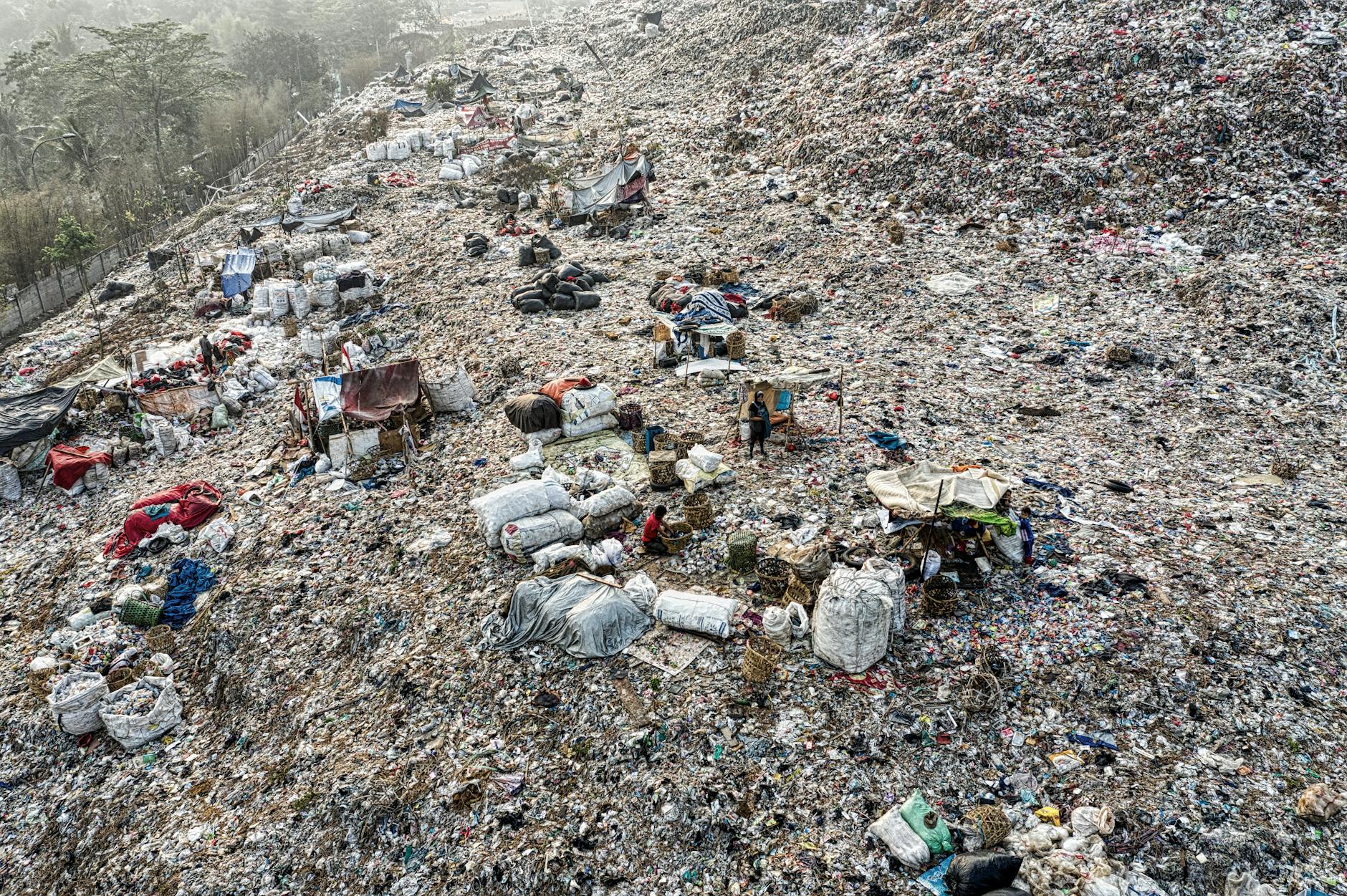
The stories that drove that framing were real and significant. The 2013 collapse of the Rana Plaza garment factory in Bangladesh, which killed over 1,100 workers, focused global attention on the human cost of cheap clothing production. Investigative reporting on textile dyeing pollution in rivers across Southeast Asia was genuinely alarming. The images of vast clothing graveyards in Chile's Atacama Desert — mountains of discarded garments stretching across the landscape — circulated widely and made the scale of the waste problem viscerally clear.
All of that is real. Fast fashion does produce enormous volumes of low-quality clothing, does rely heavily on underpaid labor in countries with weaker environmental regulation, and does generate staggering amounts of waste. The criticism is not manufactured.
But the narrative also developed a convenient simplicity: fast fashion bad, everything else better. And that's where it starts to break down.
What the Fast Fashion Frame Leaves Out
Luxury fashion doesn't get discussed in the same breath as environmental damage, but it probably should be. High-end brands produce clothing and accessories using resource-intensive materials — exotic leathers, virgin cashmere, silk — that carry significant environmental costs at the production level. The fashion industry's reliance on leather, across all price points, connects it directly to the livestock sector, which accounts for a substantial share of global greenhouse gas emissions.
Luxury brands have also historically destroyed unsold inventory rather than discount it — a practice intended to protect brand exclusivity that results in finished goods being incinerated or shredded. Burberry attracted significant controversy in 2018 when it was reported to have destroyed roughly $37 million worth of unsold products in a single year. The brand has since pledged to stop the practice, but it wasn't unique to Burberry, and the underlying incentive structure hasn't disappeared.
Then there's the fabric question, which cuts across all price points. Synthetic materials — polyester, nylon, acrylic — now account for the majority of global textile fiber production, and they create environmental problems that have nothing to do with how cheap or expensive the final garment is. Every time a synthetic garment is washed, it sheds microplastic fibers into the water supply. A 2016 study published in Environmental Science & Technology estimated that a single load of synthetic laundry releases hundreds of thousands of microfibers. Those fibers pass through most wastewater treatment systems and end up in oceans, freshwater systems, and ultimately in the food chain.
This is a consumer behavior problem as much as a manufacturing one, and it applies equally to a $15 polyester top from Shein and a $200 athletic jacket from a premium outdoor brand.
The Consumption Problem Nobody Wants to Talk About
Perhaps the most underreported dimension of fashion's environmental impact is the one that sits closest to home: how Americans actually use and dispose of clothing, regardless of where it came from.
The EPA estimates that Americans throw away approximately 11 million tons of textile waste annually. A significant portion of clothing donated to thrift stores doesn't get resold — it gets bundled and exported to secondhand markets in countries like Ghana and Kenya, where the volume has grown large enough to damage local textile industries and still result in substantial quantities ending up in landfills.
The carbon footprint of a garment is also heavily shaped by how it's cared for after purchase. Hot water washing, machine drying, and frequent laundering of items that don't require it all add up over the life of a piece of clothing. A study by the sustainability consultancy Quantis found that consumer use — washing, drying, ironing — accounts for a meaningful share of the total lifecycle emissions of many clothing categories.
None of this appears in the fast fashion conversation, because it implicates everyone rather than a conveniently defined category of bad actors.
What a More Accurate Picture Actually Suggests
This isn't an argument that fast fashion criticism is wrong or that Shein deserves defending. The overproduction, the labor conditions, the volume of waste — those problems are real and serious.
The argument is that focusing almost entirely on fast fashion as the source of the problem makes it easier to feel absolved by shopping at a different price point, when the reality is that clothing's environmental impact runs through the entire system — how things are made, what they're made of, how they're used, and what happens to them when they're discarded.
Researchers who study sustainable fashion tend to point toward a few practices that have genuinely measurable impact: buying less overall, wearing what you own for longer, washing in cold water, line drying, repairing rather than replacing, and being thoughtful about end-of-life disposal. These aren't glamorous recommendations. They don't require a villain.
The Takeaway
Fast fashion is a real problem, but it's also become a narrative that lets the rest of the industry — and the rest of us — off the hook a little too easily. The full story of how clothing damages the environment is spread across luxury production, synthetic fabric chemistry, and everyday consumer habits in ways that are less dramatic but arguably just as consequential.
The myth isn't that fast fashion causes harm. It does. The myth is that fast fashion is where the story begins and ends.