Cold Water, Shorter Cycles, Less Detergent: The Laundry Habits You Probably Need to Unlearn
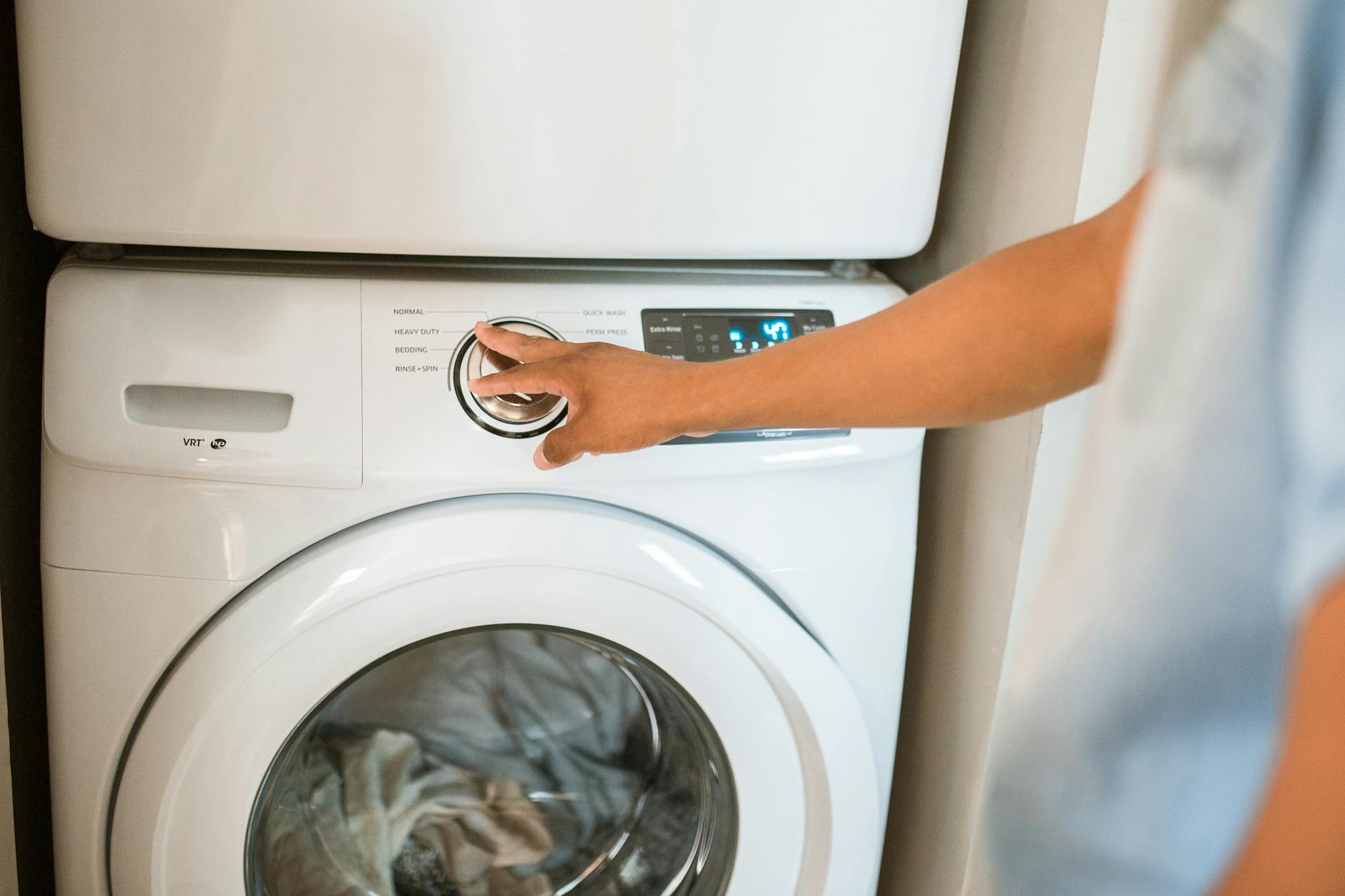
Cold Water, Shorter Cycles, Less Detergent: The Laundry Habits You Probably Need to Unlearn
There's a good chance you do laundry the same way your parents did — maybe even the same way their parents did. Warm water, a full cycle, a generous pour of detergent, and a long tumble in the dryer. It feels thorough. It feels right. And for decades, most Americans have never had a reason to think twice about it.
But laundry science has quietly moved on. The assumptions baked into those habits — that heat kills germs, that longer means cleaner, that more soap equals more clean — don't hold up as well as you might think. In fact, some of those defaults are actively working against your clothes.
The Warm Water Assumption
The belief that warm or hot water cleans better than cold is intuitive. Heat breaks things down. We use it in the kitchen, in the shower, in the dishwasher. It makes sense that it would work harder in the wash, too.
The problem is that modern laundry detergents weren't designed with that assumption in mind — at least not anymore. Most detergents sold in the U.S. today are formulated with enzymes that target stains at lower temperatures. These enzymes — the same type used in biological processes — are actually less effective when exposed to high heat, because the heat breaks them down before they can do their job.
Cold water, typically defined as around 60–80°F in a home washing machine, is more than capable of handling everyday laundry. Independent testing by consumer organizations has repeatedly found that cold water cycles produce results comparable to warm water for standard loads — everyday clothes, lightly soiled items, anything that doesn't involve heavy grease or serious contamination.
Hot water does have its place. Bedding, towels, and items that have been in contact with someone who's been sick can genuinely benefit from a higher-temperature wash. But your Tuesday work shirt? Cold is almost certainly fine.
What About Bacteria?
This is where the hot water myth gets its strongest foothold. People assume that washing at higher temperatures sanitizes their clothes — that a hot cycle is doing something close to sterilizing the fabric.
Here's the reality: the temperatures a standard home washing machine reaches on a "hot" setting — usually around 130°F — are not sufficient to kill most bacteria. True sanitization requires either much higher heat sustained over time, or the use of a laundry sanitizer product added separately. The bacteria that survive a warm cycle and the bacteria that survive a cold cycle are, for most practical purposes, roughly the same.
The dryer, interestingly, does more sanitizing work than the wash cycle — and even then, it depends on how long and how hot the dry cycle runs.
The More Detergent Problem
If you've been eyeballing your detergent pour, you're probably using too much. This one has roots in straightforward marketing: detergent companies design their measuring caps to be larger than necessary, and for years their advertising reinforced the idea that a heaping scoop meant a better clean.
In practice, excess detergent doesn't rinse out cleanly. It leaves a residue on fabric fibers that attracts dirt over time, making your clothes feel stiff, look dull, and — counterintuitively — smell worse after washing. High-efficiency (HE) machines, which most Americans now own, use significantly less water than older models, meaning they're even more prone to detergent buildup when you overpour.
Most loads need about half the amount the measuring cap suggests. For lightly soiled clothes, even less.
How Did These Habits Start?
A lot of this comes down to the era when automatic washing machines became household staples — roughly the 1950s and 60s. The machines of that period used much more water and ran much hotter by default. Detergent formulas were different. The assumption that heat and volume equaled effectiveness made more sense in that context.
But appliance defaults didn't keep pace with detergent science. Manufacturers kept warm water as the standard setting on many machines well into the 2000s, and consumers — reasonably — assumed the default was the recommendation. Detergent companies, meanwhile, had little financial incentive to tell people to use less of their product.
The result is a set of laundry habits that feel correct, feel thorough, and are largely inherited from a different technological moment.
The Real-World Takeaway
Switching to cold water for most loads will extend the life of your clothes — heat is genuinely hard on fabric fibers and dyes — reduce your energy bill, and in most cases produce results that are indistinguishable from a warm cycle. Shorter cycles, which modern machines are increasingly designed to handle efficiently, are similarly effective for everyday laundry.
The next time you load the machine, try dialing back: cold water, a normal or quick cycle, and a measured (smaller than you think) pour of detergent. Your clothes probably won't know the difference. Your energy bill will.