Air-Drying Your Clothes Isn't Always the Gentler Option — Textile Experts Explain When Your Dryer Is Actually Safer
Air-Drying Your Clothes Isn't Always the Gentler Option — Textile Experts Explain When Your Dryer Is Actually Safer
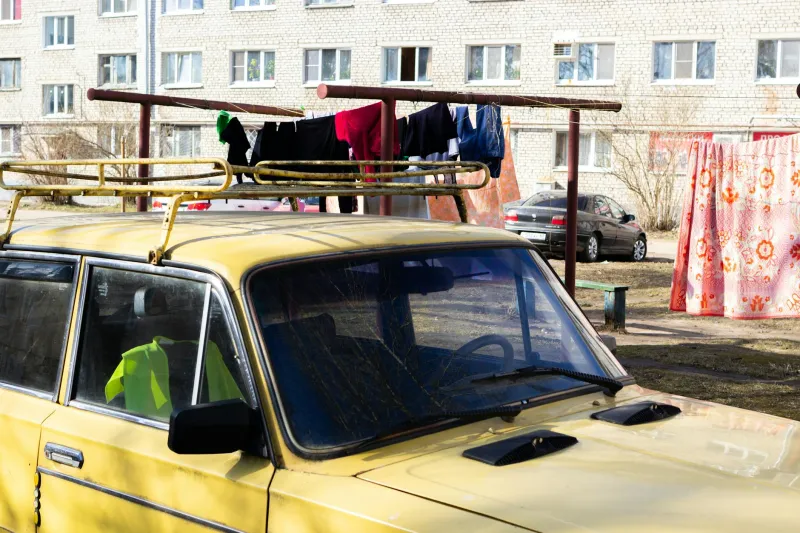
Walk into any laundromat or peek into someone's backyard, and you'll see the same scene: clothes hanging on lines, draped over chairs, or stretched across drying racks. The assumption is universal — air-drying is gentler, more natural, and better for your clothes than tossing them in a machine dryer.
But textile researchers have been quietly challenging this assumption for years. While air-drying certainly has its place, the blanket belief that it's always the safer choice has led millions of people to inadvertently damage their clothes in ways a properly used dryer never would.
The Myth That Won't Die
The idea that air-drying is universally superior runs deep in American household wisdom. It makes intuitive sense — heat damages things, right? So naturally, avoiding the dryer's heat must be better for fabric longevity.
This belief gets reinforced every time someone pulls a shrunken sweater out of the dryer or notices their favorite shirt has lost its softness. "See?" we tell ourselves. "The dryer ruins everything."
But Dr. Sarah Chen, a textile scientist at the University of Georgia, points out a crucial flaw in this logic: "People blame the dryer for damage that often comes from improper washing, not drying. Meanwhile, they're creating different types of damage through incorrect air-drying methods."
When Air-Drying Goes Wrong
The problems with air-drying aren't immediately obvious, which is why the myth persists. Unlike the dramatic shrinkage you might see from a too-hot dryer, air-drying damage happens gradually.
Take knit sweaters and t-shirts. When you hang these items by their shoulders, gravity slowly stretches the fabric. Over months of air-drying, you end up with shoulder bumps, elongated bodies, and misshapen necklines. A sweater that fits perfectly when new gradually becomes unwearable — not from heat damage, but from mechanical stress.
"Knitted fabrics are particularly vulnerable to stretching when wet," explains textile engineer Mark Rodriguez. "The fibers are more pliable when saturated with water, so hanging them creates permanent deformation that a dryer's tumbling action would actually prevent."
Then there's the stiffness factor. Anyone who's air-dried towels knows they can turn into cardboard-like rectangles. This isn't just a comfort issue — it's a sign of fiber damage. Without the mechanical action of a dryer to keep fibers flexible, they can become brittle over time.
The Moisture Trap Problem
Perhaps most surprisingly, air-drying can sometimes leave clothes less clean than machine drying. Thick fabrics like jeans or heavy sweatshirts can take 24 hours or more to fully dry, especially in humid conditions. During this extended drying period, trapped moisture creates an ideal environment for bacteria and mildew growth.
"I've seen people rewash clothes multiple times because they developed a musty smell during air-drying," says Chen. "They think the washing machine didn't work, when actually the problem was incomplete drying."
Modern dryers, by contrast, use controlled heat and airflow to remove moisture quickly and completely, often leaving clothes more hygienic than extended air-drying in less-than-ideal conditions.
What Those Care Labels Really Mean
Here's where things get really interesting: those little symbols on your clothing labels aren't as straightforward as most people think. The "hang dry" symbol doesn't necessarily mean air-drying is better for the fabric — it often means the manufacturer is playing it safe.
"Care labels are written defensively," Rodriguez explains. "A company would rather recommend air-drying than deal with complaints about heat damage from someone who used high heat on a delicate fabric."
Many items labeled "hang dry" can actually be safely machine dried on low heat with proper settings. The key is understanding your dryer's capabilities and your fabric's actual needs, not just following blanket rules.
When the Dryer Is Actually Safer
Textile experts point to several scenarios where machine drying is genuinely better for your clothes:
Stretchy fabrics: Anything with spandex, elastane, or significant stretch benefits from the dryer's ability to "reset" the fibers to their original shape.
Thick, absorbent materials: Towels, bathrobes, and heavy cotton items dry more completely and maintain better texture in a dryer.
Items prone to wrinkles: The tumbling action prevents the deep-set creases that can form during air-drying, reducing the need for ironing (which creates its own fabric stress).
Humid environments: In areas with high humidity or poor air circulation, machine drying prevents the bacterial growth that extended air-drying can encourage.
How This Belief Became So Entrenched
The "air-dry everything" myth gained traction for understandable reasons. Older dryers were less sophisticated, with fewer temperature options and less precise controls. High heat was often the only setting, making fabric damage more common.
Environmental consciousness also played a role. As people became more aware of energy consumption, air-drying seemed like the obviously greener choice. While it does use less electricity, the environmental calculation becomes more complex when you factor in the water and energy costs of rewashing clothes damaged by improper air-drying.
Social media and lifestyle blogs have amplified the myth by presenting air-drying as a simple way to extend clothing life, without diving into the nuances of when it actually works.
The Real Rules for Fabric Care
The truth about drying clothes is frustratingly complex, which is probably why the simple "always air-dry" rule became so popular. But understanding a few key principles can help you make better decisions:
Match the method to the fabric: Wovens (like button-down shirts) generally air-dry well, while knits often do better in a dryer on low heat.
Consider the environment: High humidity, poor air circulation, or limited space can make machine drying the more practical choice.
Use proper techniques: If you do air-dry, lay knits flat instead of hanging them, and ensure complete drying to prevent bacterial growth.
Trust modern technology: Today's dryers have moisture sensors and gentle cycles that make them far less damaging than their predecessors.
The Takeaway
The next time someone tells you that air-drying is always better for your clothes, remember that textile science tells a more complicated story. While air-drying certainly has its place, blindly following this rule can lead to stretched-out sweaters, stiff towels, and musty-smelling clothes.
The best approach isn't choosing one method over the other — it's understanding when each technique works best for your specific fabrics and circumstances. Your dryer isn't the fabric-destroying monster it's often made out to be, and your drying rack isn't the gentle savior you might think it is.
Sometimes the most caring thing you can do for your clothes is to give them a gentle tumble in a modern dryer.