That 10% Brain Capacity Thing Everyone Believes? It Started With Misquoted Scientists and Self-Help Gurus
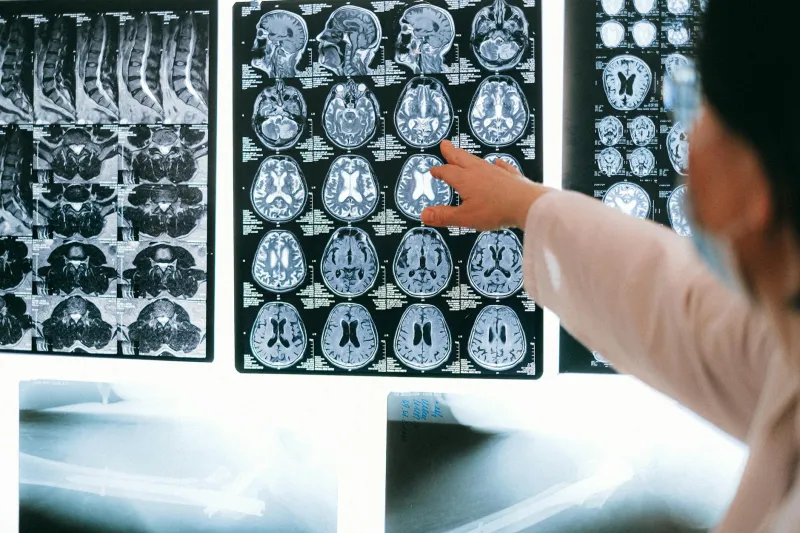
Ask anyone on the street what percentage of their brain they use, and chances are they'll confidently tell you it's around 10%. This "fact" has become so embedded in popular culture that it's spawned countless movies, self-help books, and motivational speeches promising to unlock your hidden mental potential.
There's just one problem: it's completely wrong.
What Neuroscience Actually Shows
Modern brain imaging technology tells a very different story. When scientists use MRI scans, PET scans, or other imaging techniques to observe brain activity, they see that we use virtually all of our brain — just not all at the same time.
"Even during sleep, more than 10% of the brain is active," explains Dr. Barry Gordon, a neurologist at Johns Hopkins School of Medicine. "And during waking hours, we're using much, much more."
Think of it like a city's electrical grid. Not every light, appliance, and machine is running simultaneously, but the infrastructure is there and ready to activate when needed. Your brain works similarly — different regions light up for different tasks, but the entire organ is engaged in the complex work of keeping you alive and functioning.
Brain damage research also contradicts the 10% myth. If 90% of our brain was truly unused, damage to those areas should have no effect. Instead, neuroscientists have found that damage to virtually any brain region produces noticeable changes in behavior, cognition, or physical function.
The Mystery Origins of a Persistent Myth
So where did this compelling but false idea come from? The truth is, nobody can pinpoint a single source — which is part of what makes the myth so fascinating.
The earliest known reference appears in a 1936 foreword to Dale Carnegie's famous book "How to Win Friends and Influence People." The writer claimed that "the average person develops only 10% of his latent mental ability." But even Carnegie didn't cite a specific scientist or study.
Some researchers trace the myth back to Harvard psychologist William James, who wrote in 1908 that "we are making use of only a small part of our possible mental and physical resources." But James never mentioned a specific percentage, and he was talking about human potential in general — not unused brain tissue.
Other potential sources include early misinterpretations of brain research. In the early 1900s, scientists were just beginning to map brain functions using electrical stimulation. They found that stimulating certain areas produced clear responses, while other areas seemed "silent." These silent areas were later discovered to be association regions crucial for complex thinking — but early researchers didn't know that yet.
Why the Myth Became Irresistible
The 10% brain myth persisted not because of scientific evidence, but because it tells us exactly what we want to hear: that we all have untapped potential waiting to be unleashed.
"It's an appealing idea because it suggests that we could be so much more than we are," says Dr. Scott Lilienfeld, a psychology professor who has studied popular myths. "It feeds into our natural optimism about human potential."
The myth also perfectly suited the booming self-help industry of the 20th century. If people only used 10% of their brain, then books, courses, and seminars promising to unlock the other 90% had a ready-made market. The concept appeared in everything from Dale Carnegie's courses to more recent films like "Limitless" and "Lucy."
Hollywood especially loved the idea because it provided a simple explanation for superhuman abilities. Why can this character suddenly become a genius or develop psychic powers? Because they're now using more than 10% of their brain, of course.
The Real Story About Brain Potential
While the 10% myth is false, that doesn't mean human brains can't improve or that potential is limited. Neuroscientists have discovered that brains are remarkably plastic — they can form new connections, strengthen existing ones, and even generate new neurons throughout life.
The difference is that improvement comes from using your brain more effectively, not from accessing some hidden 90%. Learning new skills, practicing challenging tasks, and staying mentally active can all enhance cognitive function. But these changes happen through better organization and efficiency, not by switching on dormant brain regions.
"The brain you have is already incredibly powerful," notes Dr. Gordon. "The goal isn't to use more of it — it's to use it better."
Why Bad Science Sticks Around
The persistence of the 10% brain myth reveals something important about how misinformation spreads. Compelling stories often outlast boring facts, especially when those stories align with our hopes and desires.
The myth also demonstrates how scientific-sounding claims can gain credibility through repetition, even without solid evidence. Once the idea entered popular culture, it became "common knowledge" that few people bothered to question.
The Takeaway
Your brain isn't a mostly empty warehouse with vast unused potential sitting idle. It's more like a sophisticated symphony orchestra where different sections contribute to the overall performance. Every region has a role, and the magic happens through coordination and practice, not by adding more instruments.
The next time someone tells you about unlocking 90% of your unused brain power, you'll know the real story: you're already using virtually all of it. The question isn't how to access more of your brain — it's how to help the brain you have perform at its best.